Source christmas embroidered sleep eye mask for Travel, Sleep, and Parties
Compare 30 listings for the christmas embroidered sleep eye mask featuring silk and polyester materials with customization options. Buyers can evaluate specifications like size, packaging, and certifications from suppliers in China.
Key considerations
Products List






Comprehensive Sourcing Guide
Strategic Sourcing Guide for Christmas Embroidered Sleep Eye Masks
The global market for sleep accessories has expanded significantly, driven by increasing consumer awareness of sleep hygiene and the rising demand for personalized wellness products. For procurement professionals seeking a "Christmas embroidered sleep eye mask," the sourcing landscape requires a nuanced understanding of product specifications, material composition, and supply chain logistics. This guide synthesizes available product data and industry standards to provide a comprehensive framework for evaluating suppliers and ensuring product quality. The focus remains on the intersection of festive customization and functional sleep support, ensuring that buyers can navigate the complexities of B2B procurement without relying on unverified claims.
Technical Specifications and Material Composition
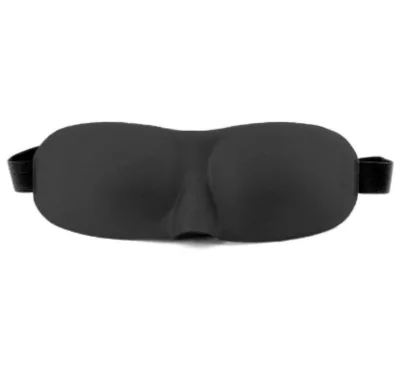
When evaluating potential suppliers for sleep eye masks, the technical specifications form the foundation of product selection. The core product category often includes 3D contoured designs, which are engineered to prevent pressure on the eyelids, thereby enhancing sleep quality. A critical observation from available market data indicates that the product model often referenced in this sector includes variants such as EM-001 and EM-004, alongside specific model numbers like 3DSEY-01 and DV. These identifiers suggest a range of structural designs, from standard flat masks to more complex 3D structures.
Material selection is paramount for both comfort and functionality. The supply chain data highlights a diversity in material composition, with "Silk" and "polyester & sponge" being prominent options. Silk is traditionally associated with premium comfort and temperature regulation, while polyester combined with sponge offers a balance of durability, shape retention, and cushioning. Buyers must verify the specific material blend for their target market, as the "mask material" is sometimes listed generically as "Other," necessitating direct inquiry into the fabric composition. Furthermore, the thickness of the mask is a key specification, with "Medium" thickness being a common attribute for standard models. The dimensions also vary; while some products are listed at 21x8cm, others may adhere to a standard of 20*10cm or be fully customized. The single package size often measures around 23x9x1.5 cm, which is crucial for calculating shipping volumes and logistics costs.
Customization Capabilities and Branding Options
One of the primary drivers for sourcing these items, particularly for the Christmas season, is the ability to customize the product. The data confirms that "Customization" is a widely available attribute across the supply base. This extends to the product model itself, which can be "Standard and customized," allowing buyers to tailor the physical dimensions and design to specific brand requirements.
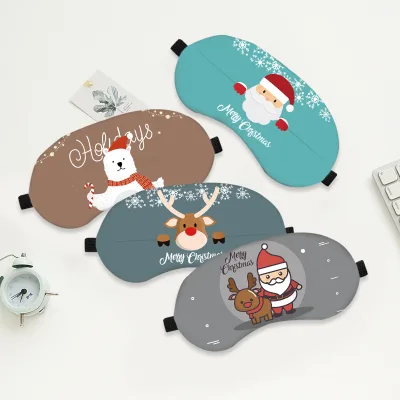
Branding is a critical component of the procurement strategy. Suppliers frequently offer "Customized Logo Accept" services, with "Printing" and "1 Color" being the standard methods observed. For a Christmas-themed product, the embroidery or printing technique must be precise to ensure the festive design is legible and durable. The "Logo" attribute is often linked to the "Color" options, which range from standard "Black, blue" to "OEM" (Original Equipment Manufacturer) color specifications. Buyers should note that while some listings mention "Color: Black," the broader capability allows for a spectrum of colors to match holiday themes. The "Product name" itself, such as "3D Contoured sleeping mask eye mask," indicates that the customization can extend to the product identity and marketing positioning.
Compliance, Certifications, and Safety Standards
In the B2B sector, compliance and certification are non-negotiable, especially for products that come into direct contact with sensitive areas like the eyes. The available data indicates that suppliers may provide various certifications, including "Test report," "MSDS" (Material Safety Data Sheet), "FDA," and "CE." These documents serve as evidence that the materials used are safe for human contact and meet specific regulatory requirements.
However, buyers must exercise caution. The presence of a "Test report" or specific certifications like "MSDS, FDA, CE" in a product listing does not guarantee that every unit in a large order will meet these standards. These are often sample-level verifications. The "prod_standard" is frequently listed as "Customized," which implies that the safety and quality benchmarks may be defined by the buyer's requirements rather than a universal industry standard. Therefore, procurement teams must explicitly request current, valid certification documents for the specific batch being ordered. The "Certificate" attribute should be treated as a variable that requires active verification rather than an inherent guarantee. For products intended for the Christmas market, where gifting is common, ensuring that the materials are non-toxic and hypoallergenic is essential, particularly for the "Adults" and "Unisex" age and gender groups identified in the data.
Cost Drivers and Minimum Order Quantities
Understanding the cost structure is vital for budgeting and margin analysis. The observed price range for these products in the market is between 0.2 and 7 USD, a wide spectrum that reflects differences in material quality, customization complexity, and order volume. The "Silk" variants will naturally command a higher price point compared to "polyester & sponge" options. Additionally, the "MOQ" (Minimum Order Quantity) is a significant cost driver. The data shows an MOQ range from 10 to 10,000 units, with a specific observation of 1000 PCS for certain models.
For buyers planning a Christmas campaign, the MOQ must align with inventory projections. A lower MOQ of 10 or 1000 allows for smaller, test orders, while higher volumes of 10,000 may be necessary to achieve the lower end of the price range. The "Packing" method also influences cost; options range from simple "Opp Bag" to more elaborate "Color Gift Boxes." The choice of packaging directly impacts the unit cost and the perceived value of the product as a holiday gift. Furthermore, the "Single gross weight" of 0.010 kg is a critical figure for freight calculations. While light, when multiplied by thousands of units, the weight significantly affects shipping costs, especially for air freight. Buyers should also account for "Sample" costs, which are often "Freight Collect," and the "Sample Time" of 7-10 days, which can impact the overall project timeline.
Supplier Evaluation and Geographic Considerations
Evaluating suppliers requires a focus on their operational capabilities and geographic location. The data indicates that the "prod_origin" and "place of origin" are primarily in China, with specific mentions of "Guangdong" and "Shanghai." These regions are known for their robust textile and manufacturing infrastructure, which is advantageous for sourcing sleep masks. However, buyers should not assume that all suppliers in these locations have identical capabilities.
Supplier evaluation should include a review of their "Advantage" claims, such as "Perfect Match" for customization or "Comfortable" product features. These are marketing observations and must be validated through physical samples. The "Feature" attributes, including "Keep Warm," "Health Care," and "Support," should be verified against the actual product performance. For a Christmas product, the "occasion" is explicitly noted, but the supplier's ability to meet the specific "Christmas" demand requires checking their production capacity and lead times. The "Disposable" attribute is listed as "Non-Disposable," confirming that these are durable goods intended for repeated use, which aligns with the "Support" and "Health Care" features. Buyers must ensure that the supplier's production lines are capable of handling the specific "Embroidered" requirements, as embroidery adds a layer of complexity to the manufacturing process compared to simple printing.
Quality Control and Long-Term Procurement Strategy
Quality control (QC) is the final barrier between a successful procurement and a costly failure. Given the "Customized" nature of the product, QC protocols must be rigorous. The "Test report" mentioned in the data should be the baseline, but buyers should implement their own QC checks upon receipt of goods. This includes verifying the "Color" accuracy, the integrity of the "Logo" printing or embroidery, and the structural integrity of the "3D Contoured" design. The "Thickness" and "Single package size" should be measured to ensure they match the agreed-upon specifications.
For long-term procurement, building a relationship with a supplier who offers "Customized" standards is beneficial. The ability to adjust the "prod_standard" and "prod_packing" (ranging from "OPP Bag or Customized" to "Color Gift Boxes") allows for flexibility in future orders. The "Sample Time" of 7-10 days suggests a responsive supply chain, but buyers should confirm if this timeline holds during peak seasons like Christmas. The "Selling Units" are typically "Single item," which simplifies inventory management but requires careful forecasting. Ultimately, the success of sourcing a Christmas embroidered sleep eye mask depends on balancing the desire for festive customization with the practical realities of material quality, certification compliance, and logistical efficiency. By adhering to these evidence-based guidelines, buyers can mitigate risks and secure high-quality products that meet the demands of the holiday market.
FAQs
What materials are used for christmas embroidered sleep eye masks?
Common materials include silk and a blend of polyester with sponge. Buyers should verify the specific composition as some listings list the material generically as Other, requiring direct inquiry to ensure the correct fabric for comfort and durability.
Can I customize the logo and color for these eye masks?
Yes, customization is available for logos and colors, with options for printing or embroidery. Suppliers accept customized logos and offer colors like black or blue, though specific OEM color requests may require confirmation of the printing method capabilities.
What certifications are required for safety compliance?
Suppliers may provide test reports, MSDS, FDA, and CE certifications for safety. However, these are often sample-level verifications, so buyers must explicitly request valid documents for the specific batch to ensure materials are safe for direct eye contact.
What is the typical minimum order quantity for these masks?
The minimum order quantity ranges from 10 to 10,000 units depending on the supplier and customization level. Specific models often list an MOQ of 1000 pieces, which allows for smaller test orders while higher volumes may reduce the unit price.
Where are the manufacturers located and what is the sample time?
Manufacturers are primarily located in China, specifically in Guangdong and Shanghai regions. Sample times typically take 7 to 10 days, and sample freight is usually collected from the buyer, which impacts the overall project timeline and initial costs.
How does packaging affect the cost and shipping weight?
Packaging options range from simple OPP bags to color gift boxes, directly influencing unit cost and perceived value. The single gross weight is approximately 0.010 kg, which is critical for calculating shipping volumes and logistics costs for large orders.
What are the standard dimensions and thickness of the masks?
Standard sizes vary, with some models measuring 21x8cm or 20x10cm, while others are fully customized. The thickness is generally listed as medium, and the single package size often measures around 23x9x1.5 cm for logistics planning.